
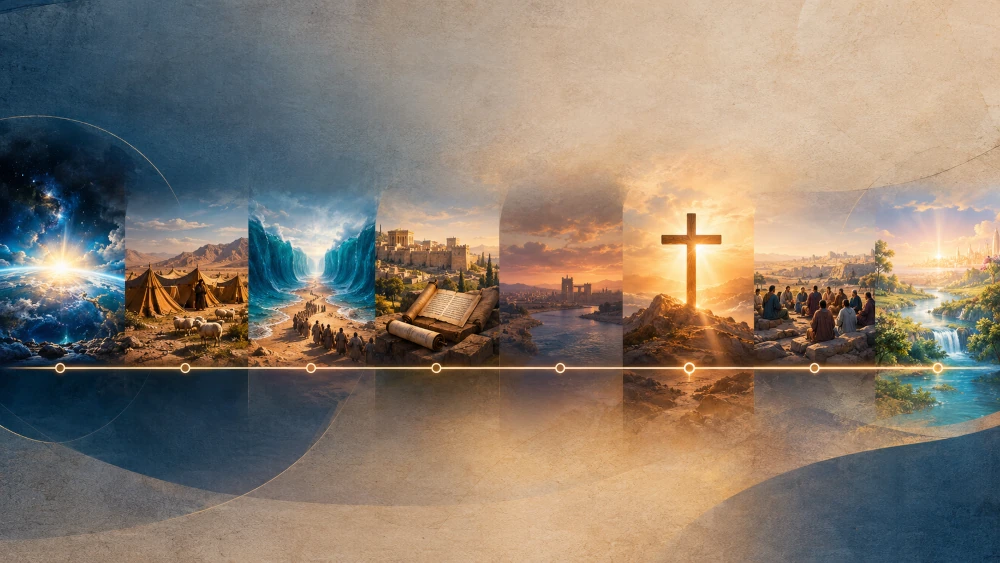
The Bible is not a random collection of ancient stories: it is one great story that begins in a garden, passes through empires, covenants, kings, prophets, and exiles, reaches its center in Jesus Christ, and ends in a city where God dwells with His people.
But reading that story in order can be difficult. Did Abraham live before or after Moses? Which prophets spoke during the divided kingdom? When did Jerusalem fall? This biblical timeline organizes the main periods, people, and events from creation to the new creation, with biblical references and the level of certainty for each date.
Levels of Chronological Certainty
- ● Historically established date (supported by external sources)
- ◐ Approximate date (may vary by a few years)
- ◇ Disputed date (two or more serious proposals)
- ✦ No determined date (the biblical text does not place it on a modern calendar)
Creation and Primeval History
✦ No determined date
The Patriarchs
◐ Approx. 2000–1700 B.C.
Exodus and Sinai
◇ 15th or 13th centuries BC (debated)
Conquest and Settlement
◇ Late Bronze–Iron I
Period of the Judges
◐ Approx. 1200–1050 BC.
United Monarchy
◐ Approx. 1020–931 BC.
Divided Kingdom
◐ Approx. 931–722 BC.
Judah after Israel
● 722–587/586 BC.
Babylonian Exile
● 587/586–539 BC.
Persian Restoration
● 539–332 BC.
Intertestamental Period
◐ 332–63 BC.
Jesus and the Gospels
◐ Birth approx. 6–4 BC; ministry 27–30/33 AD.
Apostolic Church
◐ Approx. AD 30–70
Revelation and New Creation
◇ Composed approx. AD 90–96; future fulfillment
Kings of Israel and Judah
Corregencies and the different systems for counting years create variations between chronologies: all dates are approximate.
Northern Kingdom — Israel
| King | Approx. reign | Prophets | ||
|---|---|---|---|---|
| 1 | ✦ Undetermined date | Creation | God, Adam and Eve | Genesis 1–2 |
| 2 | ✦ Undetermined date | Fall | Adam and Eve | Genesis 3 |
| 3 | ✦ Undetermined date | Flood | Noah | Genesis 6–9 |
| 4 | ✦ Undetermined date | Babel | Nations | Genesis 11 |
| 5 | ◐ Approx. 2000–1700 BC | Patriarchs | Abraham, Isaac, and Jacob | Genesis 12–36 |
| 6 | ◐ Second millennium BC | Joseph and the arrival in Egypt | Joseph and Jacob | Genesis 37–50 |
| 7 | ◇ 15th–13th centuries BC | Exodus | Moses and Aaron | Exodus 1–15 |
| 8 | ◇ 15th–13th centuries BC | Sinai and the Law | Moses | Exodus 19–40 |
| 9 | ◇ Late Bronze–Iron I | Conquest and Settlement | Joshua and Caleb | Joshua |
| 10 | ◐ Approx. 1200–1050 BC | Judges | Deborah, Gideon, and Samson | Judges |
| 11 | ◐ Approx. 1021–1000 BC | Reign of Saul | Saul and Samuel | 1 Samuel |
| 12 | ◐ Approx. 1000–970 BC | Reign of David | David and Nathan | 2 Samuel |
| 13 | ◐ Approx. 970–931 BC | Solomon and the first temple | Solomon | 1 Kings 1–11 |
| 14 | ◐ Approx. 931 BC | Divided Kingdom | Rehoboam and Jeroboam | 1 Kings 12 |
| 15 | ● 722/720 BC | Fall of Israel | Hosea; the prophet Hosea | 2 Kings 17 |
| 16 | ● 587/586 BC | Fall of Judah and exile | Zedekiah, Jeremiah, and Ezekiel | 2 Kings 25 |
| 17 | ● 539–515 BC | Return and second temple | Cyrus, Zerubbabel, Haggai and Zechariah | Ezra 1–6 |
| 18 | ◐ 6/4 BC–AD 30/33 | Jesus: incarnation, ministry, cross and resurrection | Jesus and the disciples | Matthew–John |
| 19 | ◐ From AD 30/33 | Pentecost and expansion of the Church | Peter, Paul and the Church | Acts |
| 20 | ◇ Late first century; future fulfillment | Revelation and New Creation | Christ glorified | Revelation |
| Jeroboam I | 931–910 BC | Ahijah | ||
| Nadab | 910–909 BC | — | ||
| Baasha | 909–886 BC | Jehu son of Hanani | ||
| Elah | 886–885 BC | — | ||
| Zimri | 885 BC | — | ||
| Omri | 885–874 BC | — | ||
| Ahab | 874–853 BC | Elijah and Micaiah | ||
| Ahaziah | 853–852 BC | Elijah | ||
| Joram | 852–841 BC | Elisha | ||
| Jehu | 841–814 BC | Elisha | ||
| Jehoahaz | 814–798 BC | Elisha | ||
| Jehoash | 798–782 BC | Elisha | ||
| Jeroboam II | 793–753 BC | Jonah, Amos and Hosea | ||
| Zechariah | 753–752 BC | Hosea | ||
| Shallum | 752 BC | Hosea | ||
| Menahem | 752–742 BC | Hosea | ||
| Pekahiah | 742–740 BC | Hosea | ||
| Pekah | 752/740–732 BC | Hosea and Isaiah | ||
| Hosea | 732–722 BC | Hosea |
Southern Kingdom — Judah
| King | Approx. reign | Prophets | ||
|---|---|---|---|---|
| 1 | ✦ Undetermined date | Creation | God, Adam and Eve | Genesis 1–2 |
| 2 | ✦ Undetermined date | Fall | Adam and Eve | Genesis 3 |
| 3 | ✦ Undetermined date | Flood | Noah | Genesis 6–9 |
| 4 | ✦ Undetermined date | Babel | Nations | Genesis 11 |
| 5 | ◐ Approx. 2000–1700 BC | Patriarchs | Abraham, Isaac, and Jacob | Genesis 12–36 |
| 6 | ◐ Second millennium BC | Joseph and the arrival in Egypt | Joseph and Jacob | Genesis 37–50 |
| 7 | ◇ 15th–13th centuries BC | Exodus | Moses and Aaron | Exodus 1–15 |
| 8 | ◇ 15th–13th centuries BC | Sinai and the Law | Moses | Exodus 19–40 |
| 9 | ◇ Late Bronze–Iron I | Conquest and Settlement | Joshua and Caleb | Joshua |
| 10 | ◐ Approx. 1200–1050 BC | Judges | Deborah, Gideon, and Samson | Judges |
| 11 | ◐ Approx. 1021–1000 BC | Reign of Saul | Saul and Samuel | 1 Samuel |
| 12 | ◐ Approx. 1000–970 BC | Reign of David | David and Nathan | 2 Samuel |
| 13 | ◐ Approx. 970–931 BC | Solomon and the first temple | Solomon | 1 Kings 1–11 |
| 14 | ◐ Approx. 931 BC | Divided Kingdom | Rehoboam and Jeroboam | 1 Kings 12 |
| 15 | ● 722/720 BC | Fall of Israel | Hosea; the prophet Hosea | 2 Kings 17 |
| 16 | ● 587/586 BC | Fall of Judah and exile | Zedekiah, Jeremiah, and Ezekiel | 2 Kings 25 |
| 17 | ● 539–515 BC | Return and second temple | Cyrus, Zerubbabel, Haggai and Zechariah | Ezra 1–6 |
| 18 | ◐ 6/4 BC–AD 30/33 | Jesus: incarnation, ministry, cross and resurrection | Jesus and the disciples | Matthew–John |
| 19 | ◐ From AD 30/33 | Pentecost and expansion of the Church | Peter, Paul and the Church | Acts |
| 20 | ◇ Late first century; future fulfillment | Revelation and New Creation | Christ glorified | Revelation |
| Rehoboam | 931–913 BC | Shemaiah | ||
| Abijah | 913–911 BC | Iddo | ||
| Asa | 911–870 BC | Azariah and Hanani | ||
| Jehoshaphat | 873–849 BC | Jehu, Jahaziel, and Micaiah | ||
| Joram | 853–841 BC | Elijah | ||
| Ahaziah | 841 BC | — | ||
| Athaliah | 841–835 BC | — | ||
| Jehoash | 835–796 BC | Zechariah son of Jehoiada | ||
| Amaziah | 796–767 BC | — | ||
| Uzziah | 792–740 BC | Isaiah and Amos | ||
| Jotham | 750–732 BC | Isaiah and Micah | ||
| Ahaz | 735–715 BC | Isaiah and Micah | ||
| Hezekiah | 715–686 BC | Isaiah and Micah | ||
| Manasseh | 697–642 BC | — | ||
| Amon | 642–640 BC | — | ||
| Josiah | 640–609 BC | Huldah, Jeremiah and Zephaniah | ||
| Jehoahaz | 609 BC | Jeremiah | ||
| Jehoiakim | 609–598 BC | Jeremiah and Habakkuk | ||
| Jehoiachin | 598–597 BC | Jeremiah and Ezekiel | ||
| Zedekiah | 597–587/586 BC | Jeremiah and Ezekiel |
The Empires of the Bible
| Empire | Relevant Period | Relationship to Biblical History | ||
|---|---|---|---|---|
| 1 | ✦ Undetermined date | Creation | God, Adam and Eve | Genesis 1–2 |
| 2 | ✦ Undetermined date | Fall | Adam and Eve | Genesis 3 |
| 3 | ✦ Undetermined date | Flood | Noah | Genesis 6–9 |
| 4 | ✦ Undetermined date | Babel | Nations | Genesis 11 |
| 5 | ◐ Approx. 2000–1700 BC | Patriarchs | Abraham, Isaac, and Jacob | Genesis 12–36 |
| 6 | ◐ Second millennium BC | Joseph and the arrival in Egypt | Joseph and Jacob | Genesis 37–50 |
| 7 | ◇ 15th–13th centuries BC | Exodus | Moses and Aaron | Exodus 1–15 |
| 8 | ◇ 15th–13th centuries BC | Sinai and the Law | Moses | Exodus 19–40 |
| 9 | ◇ Late Bronze–Iron I | Conquest and Settlement | Joshua and Caleb | Joshua |
| 10 | ◐ Approx. 1200–1050 BC | Judges | Deborah, Gideon, and Samson | Judges |
| 11 | ◐ Approx. 1021–1000 BC | Reign of Saul | Saul and Samuel | 1 Samuel |
| 12 | ◐ Approx. 1000–970 BC | Reign of David | David and Nathan | 2 Samuel |
| 13 | ◐ Approx. 970–931 BC | Solomon and the first temple | Solomon | 1 Kings 1–11 |
| 14 | ◐ Approx. 931 BC | Divided Kingdom | Rehoboam and Jeroboam | 1 Kings 12 |
| 15 | ● 722/720 BC | Fall of Israel | Hosea; the prophet Hosea | 2 Kings 17 |
| 16 | ● 587/586 BC | Fall of Judah and exile | Zedekiah, Jeremiah, and Ezekiel | 2 Kings 25 |
| 17 | ● 539–515 BC | Return and second temple | Cyrus, Zerubbabel, Haggai and Zechariah | Ezra 1–6 |
| 18 | ◐ 6/4 BC–AD 30/33 | Jesus: incarnation, ministry, cross and resurrection | Jesus and the disciples | Matthew–John |
| 19 | ◐ From AD 30/33 | Pentecost and expansion of the Church | Peter, Paul and the Church | Acts |
| 20 | ◇ Late first century; future fulfillment | Revelation and New Creation | Christ glorified | Revelation |
| Egypt | Various Periods | Exodus, Alliances, and Conflicts | ||
| Assyria | 9th–7th Centuries BC | Fall of the Northern Kingdom | ||
| Babylon | 7th–6th Centuries BC | Destruction of Jerusalem and exile | ||
| Persia | 539–332 BC. | Return and reconstruction | ||
| Greece and its successors | 332–63 BC. | Hellenization and the Maccabean crisis | ||
| Rome | From 63 BC | Political context of the New Testament |
The 20 essential milestones
A quick view to review or print: the twenty events that structure the entire biblical story.
| # | Date | Milestone | Key Figures | Reference |
|---|---|---|---|---|
| 1 | ✦ Undetermined date | Creation | God, Adam and Eve | Genesis 1–2 |
| 2 | ✦ Undetermined date | Fall | Adam and Eve | Genesis 3 |
| 3 | ✦ Undetermined date | Flood | Noah | Genesis 6–9 |
| 4 | ✦ Undetermined date | Babel | Nations | Genesis 11 |
| 5 | ◐ Approx. 2000–1700 BC | Patriarchs | Abraham, Isaac, and Jacob | Genesis 12–36 |
| 6 | ◐ Second millennium BC | Joseph and the arrival in Egypt | Joseph and Jacob | Genesis 37–50 |
| 7 | ◇ 15th–13th centuries BC | Exodus | Moses and Aaron | Exodus 1–15 |
| 8 | ◇ 15th–13th centuries BC | Sinai and the Law | Moses | Exodus 19–40 |
| 9 | ◇ Late Bronze–Iron I | Conquest and Settlement | Joshua and Caleb | Joshua |
| 10 | ◐ Approx. 1200–1050 BC | Judges | Deborah, Gideon, and Samson | Judges |
| 11 | ◐ Approx. 1021–1000 BC | Reign of Saul | Saul and Samuel | 1 Samuel |
| 12 | ◐ Approx. 1000–970 BC | Reign of David | David and Nathan | 2 Samuel |
| 13 | ◐ Approx. 970–931 BC | Solomon and the first temple | Solomon | 1 Kings 1–11 |
| 14 | ◐ Approx. 931 BC | Divided Kingdom | Rehoboam and Jeroboam | 1 Kings 12 |
| 15 | ● 722/720 BC | Fall of Israel | Hosea; the prophet Hosea | 2 Kings 17 |
| 16 | ● 587/586 BC | Fall of Judah and exile | Zedekiah, Jeremiah, and Ezekiel | 2 Kings 25 |
| 17 | ● 539–515 BC | Return and second temple | Cyrus, Zerubbabel, Haggai and Zechariah | Ezra 1–6 |
| 18 | ◐ 6/4 BC–AD 30/33 | Jesus: incarnation, ministry, cross and resurrection | Jesus and the disciples | Matthew–John |
| 19 | ◐ From AD 30/33 | Pentecost and expansion of the Church | Peter, Paul and the Church | Acts |
| 20 | ◇ Late first century; future fulfillment | Revelation and New Creation | Christ glorified | Revelation |
Frequently Asked Questions
Does the timeline contain all the events of the Bible?
No. It presents the most important periods, characters, and events for understanding the overall structure of the biblical story.
Why do some dates appear as approximate?
Ancient systems did not always record years in the same way. In addition, some kings ruled simultaneously with their fathers or successors: those coregencies produce variations between modern chronologies.
Why doesn't creation have a date?
Genesis does not connect creation to a modern historical calendar. The date 4004 BC, known in some traditions, comes from a later reconstruction and does not represent biblical, historical, or scientific consensus.
When did the exodus occur?
There are two main proposals: during the 15th century BC or during the 13th century BC. The available information has not produced a definitive consensus.
When was Jerusalem destroyed by Babylon?
The dates 587 and 586 BC are used; the difference depends on how the years of Nebuchadnezzar II's reign are counted.
When was Jesus born and crucified?
His birth is placed between 6 and 4 BC (the Christian calendar was calculated centuries later). The crucifixion is placed at approximately 30 or 33 AD.
When was Revelation written?
The majority traditional date places it between 90 and 96 AD; some researchers propose a date before the year 70.
Does this timeline predict when Christ will return?
No. The second coming, the final resurrection, and the new creation are presented as a future hope without a calendar date.
Take it with you: printable version
Download the complete timeline in PDF: periods, kings, prophets, empires, and biblical references, ready to study or teach.
View the resource: Printable Timeline
Free · No sign-up · Letter and A4 format
Are you preparing a message from a period or character? Organize your outline with the biblical sermon templates and verify your interpretation with the with key terms, and downloadable guides for small groups. All without registration and ready to print or use on screen.. And if you want to walk through the Bible's history day by day, follow the 90-day Bible reading plan.